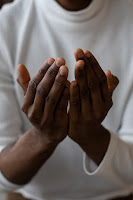
Sunday, November 21, 2021

Spiritual Air and Water

While the resurrected Christ ministered among the Nephites in the Western Hemisphere, he instituted the ordinance of the Sacrament of the Last Supper. His gospel is the same on both sides of the world and so are the ordinances. Directly after administering the sacrament, Jesus encouraged His twelve special disciples to pray:

Verily, verily, I say unto you, ye must watch and pray always, lest ye be tempted by the devil, and ye be led away captive by him. 
--3 Nephi 18:15

He then turned to the multitude who had just partaken of the sacrament and repeated the same instructions:

Behold, verily, verily, I say unto you, ye must watch and pray always lest ye enter into temptation; for Satan desireth to have you, that he may sift you as wheat.
--3 Nephi 18:18

Repetition in scripture indicates significance and emphasis. The Savior used these exact words twice in this brief sermon on prayer. He did not want the lesson lost. 

Watching and praying are of vital importance to my spiritual welfare. They are like air and water. 

For what must I watch? Temptation—the sly, insidious, almost imperceptible invitations to stray from the Lord's way, the covenant path. The Big 10 are not Satan's weapons. I'm highly unlikely to commit murder, rob a bank, or perjure myself in court. To quote Joseph Smith, "A disposition to commit such was never in my nature" (Pearl of Great Price, Joseph Smith History 1:28).

A million little things can rack up a big score, however. I must watch for the small sins—often not so much what I do but what I don't do. Despite the Savior's injunction to "watch", I become easily lulled into complacency and inattention. I simply forget to watch.

And so, the second injunction to "pray always." Knowing I would fail to watch perfectly, Jesus directs me to bolster my faulty watching with prayer. When I watch, I put the onus on myself to be aware of the temptations that beset me and to avoid them. When I pray, however, I put the onus (and my faith) on God  to help me, to watch for me, and to steer me clear of the obstacles my enemy puts in my path. Between my feeble attempts and God's immense power, there is hope for me.

One more thought: Note the scripture does not say "pray regularly" or "pray daily". It says to "pray always". How do I pray always if I cannot watch always? Given my one-track mind, how do I focus on watching and praying continually while I must also give my attention to the things of daily life, particularly the mental activities like writing? Should I lock myself in a monastic cell and shut the door to all outside distractions? I could watch and pray always, but I wouldn't be of much use to anyone.

Though we usually think of the word "always" in its primary sense of "at all times and on all occasions," it has a second meaning: "as a last resort." For instance, if you can't get your car to start, you can always call a tow truck. Is that the meaning of "prayer always?" If I have done all I can to watch myself and keep myself out of trouble, is prayer my last resort? Is prayer my last hope? Isn't prayer really my only hope? Isn't faith in Christ and repentance my one true hope?

Sunday, November 14, 2021

A Prayer for Others

The Book of Mormon, Another Testament of Jesus Christ, chronicles the advent of the resurrected Savior to a people in the Western Hemisphere. During His glorious three days among the people, He taught them His doctrine and His gospel, the same principles He taught to His Judean disciples before His death and resurrection.

Among the many precepts Jesus taught the eager people was the injunction to pray. And so they would understand the form of prayer He wanted them to experience, Jesus taught by example. After directing the multitude to kneel, "he himself also knelt upon the earth; and behold he prayed unto the Father, and the things which he prayed cannot be written, and the multitude did bear record who heard him. And after this manner do they bear record: The eye hath never seen, neither hath the ear heard, before, so great and marvelous things as we saw and heard Jesus speak unto the Father; And no tongue can speak, neither can there be written by any man, neither can the hearts of men conceive so great and marvelous things as we both saw and heard Jesus speak; and no one can conceive of the joy which filled our souls at the time we heard him pray for us unto the Father" (3 Nephi 17:15-17).

Having set the example, Christ then commanded His disciples:

And as I have prayed among you even so shall ye pray in my church, among my people who do repent and are baptized in my name. Behold I am the light; I have set an example for you.
--3 Nephi 18:16

The church is a society in which we pray for one another. If I do not pray for others, I am missing an important aspect of membership and discipleship in Christ's church.

I do not claim to understand how prayers on behalf of others work. I believe, however, that my prayers for others is a similitude of Christ's advocacy and intervention for me. 

God the Father knows all things. He doesn't need me to tell Him what to do or how to do it, either for myself or for others. Yet, Christ's commandment to pray always and for others stands as a critical injunction to those who would be His disciples. 

And so, because I want to be a disciple of Jesus Christ, I pray for others. It's a habit. I can't stop myself. I think of people I love, and I ask God to bless them with whatever they need. I rarely know what even those closest to me truly need. I may see outward signs of distress or trials, but I don't know what God knows about their real, eternal needs. Nevertheless, I pray. 

I hear of a neighbor struggling with an illness or affliction, and I pray for them. I don't know how God plans to heal or fix that person, or if fixing is what they actually need in their eternal progression, but I can at least pray that they will be strengthened to endure and to know if God wants me to do something to help.

I see a homeless stranger wandering the street, and I pray for them. If I gave a panhandler a million dollars, I couldn't fix their life. Even God can't fix their life if they won't turn to Him and let Him in. But I still pray. They not be praying for themselves, but at least someone is praying for them.

When I think of praying for others, I am reminded of the moving lyrics of the song "Not Too Far From Here" by Hillary Weeks:

Somebody's down to their last dime.
Somebody's running out of time.
Not too far from here.

Somebody's got nowhere else to go.
Somebody needs a little hope.
Not too far from here

And I may not know their name,
But I'm praying just the same
That You'll use me Lord to wipe away a tear,
'Cause somebody's crying
Not too far from here.

Somebody's troubled and confused.
Somebody's got nothing left to lose.
Not too far from here

Somebody's forgotten how to trust.
Somebody's dying for love.
Not too far from here

It may be a stranger's face,
But I'm praying for Your grace
To move in me and take away the fear,
'Cause somebody's hurting
Not too far from here.

Help me Lord not to turn away from pain.
Help me not to rest while those around me weep.
Give me Your strength and compassion
When somebody finds the road of life too steep.

Now I'm letting down my guard,
And I'm opening my heart.
Help me speak Your love to every needful ear.
Someone is waiting not too far from here.

Sunday, October 31, 2021

Not a Ritual

After His resurrection, Jesus visited a group of people living on the American continent. These people, called Nephites after their first great prophet, had descended from ancient Israelites and were believers in the Messiah. The Nephites lived in a tradition of prophets, revelation, and scripture for six centuries. Jesus came to them to fulfill the prophecies of their prophets and to comply with His own prophecy: "Other sheep I have, which are not of this fold: them also I must bring, and they shall hear my voice; and there shall be cone fold, and one shepherd" (John 10:16).

The resurrected Christ taught the Nephites the same gospel that He had taught the Jews in Jerusalem. Having delivered His message, Jesus prepared to depart. When He looked about the congregation, however, the people "did look steadfastly upon him as if they would ask him to tarry a little longer with them" (3 Nephi 17:5). Moved with compassion, Jesus stayed, healed their sick, and then taught them to pray.

And when he had said these words, he himself also knelt upon the earth; and behold he prayed unto the Father, and the things which he prayed cannot be written, and the multitude did bear record who heard him.
--3 Nephi 17:15


Jesus, our Exemplar in all things, set the example of prayer. Though He was resurrected and exalted, He still talked to His Father in prayer. 

Prayer is not a ritual. It is simply talking to God. The difference between praying and talking is the audience. We use a special word for this form of communication because we are talking to a special Being, but the essence of the act is the same. We put our thoughts into words, speak them either verbally or silently in our minds, and then we listen for a response. 

Like any talent, the more we practice, the easier the process becomes.

Sunday, October 24, 2021

Wanting the Right Thing

Two decades before Jesus's birth, a prophet named Nephi preached the gospel of Christ and the coming of the Messiah on the American continent. The people among whom he labored were proud and stubborn. Few of them accepted Nephi's words. Nevertheless, he worked diligently and fearlessly for years to bring the people to repentance.

At a particularly low point in his ministry, not knowing what more he could do to bring righteousness to a benighted population, Nephi heard the voice of God. The Lord encouraged Nephi to continue his efforts and gave him this blessing and promise:

Photo by Monstera from Pexels
And now, because thou hast done this with such unwearyingness, behold, I will bless thee forever; and I will make thee mighty in word and in deed, in faith and in works; yea, even that all things shall be done unto thee according to thy word, for thou shalt not ask that which is contrary to my will.
--Helaman 10:5

The most powerful prayers are those that align with God's will. Though I am certainly no prophet, when I learn to pray for what God wants, and I want the same thing in all sincerity, He is unrestrained in granting my petition. The key to getting what I want is to want the right thing, which is the thing God wants for me. So, a good start to a powerful prayer is to ask, "Lord, what do you want for me?" When I get that answer, the rest falls into place.

Sunday, October 17, 2021

Stronger in Humility

The prophet-author Mormon editorialized on the situation of the Nephites in a period in which the "pride cycle" was spinning faster than usual. The Nephite people had just experienced a brief period of peace and prosperity in which the church of Christ had grown and flourished even to the astounding of the priests and prophets. And now, because of their prosperity, many Nephites were sliding down the slippery slope of pride and persecution. 

A minority, however, remained faithful to the faith. They stayed on the path of righteousness. How did they do it? Mormon tells us, and what he says about the Nephites in their day also applies to us in our day:

Nevertheless they did fast and pray oft, and did wax stronger and stronger in their humility, and firmer and firmer in the faith of Christ, unto the filling their souls with joy and consolation, yea, even to the purifying and the sanctification of their hearts, which sanctification cometh because of their yielding their hearts unto God.
--Helaman 3:35

An interesting choice of words: "stronger in humility." I take this phrase to mean that humility became a more powerful force in the lives of the believers. It became an enabling power. As they became more humble and teachable, they acquired more power from heaven. 

As their humility grew, so did their faith in Christ. It became firm, then solid, then unbendable, then unbreakable. 

Humility and faith go hand in hand. The more humble I am, the more I see the need to depend on God. The more I depend on Him, the more He can help me. The more He helps me, the better I come to know Him. And the better I know him, the more I trust him. Trust is another word for faith. I act with growing confidence in my beliefs. 

The more thoroughly I trust God, and the more evidence I acquire of His love for and interest in me, the more joy I experience. How can one not feel exquisite joy when he recognizes that the Supreme Being in the universe knows him and cares about him?  How can he not rejoice in knowing this earth, life itself, and the grand plan of salvation were created to lift him to exaltation with God? 

Note that I do not purify and sanctify my own heart. I can only yield it to God. It is by His power through Christ's Atonement that my heart is changed. 

The key to this marvelous transformation is prayer and fasting. I start by reaching out to God, even blindly at first, but with hope. Prayer initiates the humbling, refining process in me. Once I make space for God in my life, He can go to work.

Sunday, October 10, 2021

A Full Heart

Photo by Matheus Bertelli from Pexels
I addressed this verse of scripture previously, but it so rich in content and meaning, I return to it with another insight that affects my prayer life.

Yea, and when you do not cry unto the Lord, let your hearts be full, drawn out in prayer unto him continually for your welfare, and also for the welfare of those who are around you.
--Alma 34:27

My heart being the figurative center of my thoughts and desires, it should be occupied with constant communion with God. When my heart is constantly filled by the Holy Spirit, I will be drawn instinctively to prayer, for the Spirit teaches me that I must pray always (see 2 Nephi 32:8).

Sunday, October 3, 2021

A Place for Quiet, Calm Prayers

Amulek concluded his teachings to the Zoramites about prayer with this injunction:

Yea, and when you do not cry unto the Lord, let your hearts be full, drawn out in prayer unto him continually for your welfare, and also for the welfare of those who are around you.
--Alma 34:27

Amulek makes a distinction between crying to the Lord and offering constant, silent prayer. To cry is to beg and beseech with strong emotion. I face times when I must be fully engaged in prayer, when a sedate and pleasant prayer will not do. When my heart is broken and my limits are stretched and the depth of my soul heaves very close to the surface, a cry to God is the most direct route to aid and comfort in desperate moments. 

I cannot constantly be wrought up, however. When the crisis has passed and peace has come, I still have to function in the world. In the routine of daily life, quiet, calm prayers of gratitude are also acceptable to the Lord. Like Teviah in Fiddler on the Roof, I find myself speaking to God throughout the day. A "thank you" here and a "please help" there keep the lines of communication open between me and my Heavenly Father, with Jesus and the Holy Ghost always listening in on the party line.